 Time read: 5 Mintues
In recent decades, technology has offloaded countless cognitive tasks from our shoulders. We no longer need to memorize phone numbers, birthdates, or trivia facts, everything is a click away.
However, the most profound shift has occurred in our ability to navigate space. The transition from paper maps and reliance on an internal sense of direction to Global Positioning Systems (GPS) appears to be a triumph of convenience.
Yet, recent neurological research raises a troubling question: is the price of never “losing our way” actually the loss of our brain’s ability to remember?
Learn more tips for a sharper brain in our knowledge center
The Command Center: The Fascinating Link Between Navigation and Memory
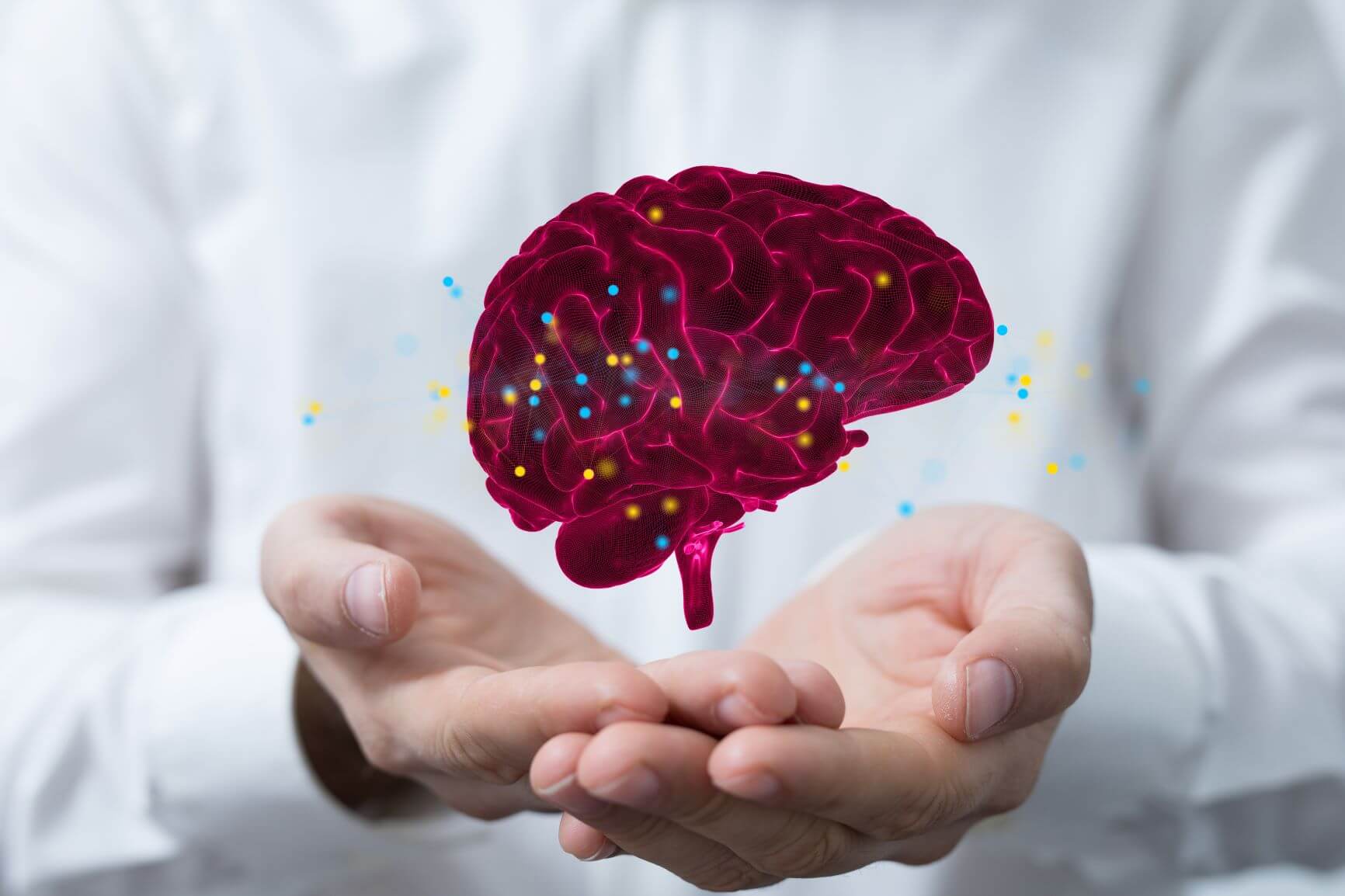
To understand why navigation is so critical to memory, we must look at the hippocampus.
This small, seahorse-shaped structure located deep within the brain plays a unique dual role: it is the primary engine for creating new episodic memories, and it also serves as the brain’s “cognitive mapping center.”
When we navigate autonomously, identifying landmarks, calculating distances, and understanding the relationship between streets, we activate “place cells” within the hippocampus. This process is akin to intensive weightlifting for the brain.
In contrast, when following GPS voice commands, the brain enters “autopilot” mode.
In this state, the hippocampus is barely engaged, and neural communication in this region diminishes.
London Taxi Drivers: Scientific Proof of Brain Plasticity
A seminal piece of evidence for this connection was found in a groundbreaking study conducted at University College London by Prof.
Eleanor Maguire. The study examined London taxi drivers, who must undergo years of rigorous training to memorize 25,000 streets, a test known as “The Knowledge.”
Using MRI scans, researchers discovered that the posterior hippocampus in taxi drivers was significantly larger than that of a control group. Furthermore, the study found that the more years of experience a driver had, the larger their hippocampal volume became.
Perhaps the most fascinating finding was that when drivers retired, their hippocampal volume tended to shrink back toward the average, highlighting the “use it or lose it” principle of neuroplasticity.
The Modern Cost: “Digital Amnesia” in Space
The problem isn’t just forgetting the way home. Science points to a phenomenon of “tunnel vision”: when using GPS, we only perceive the next few hundred yards on a screen.
This lack of peripheral environmental awareness prevents the brain from creating deep “contextual anchors,” which can lead to a decline in the ability to retrieve information and maintain focus over time. For those aged 55 and over, for whom maintaining “cognitive reserve” is vital, this is a pressing issue.
Recalculating Your Route: Practical Steps
The goal is not to abandon technology but to practice “cognitive hygiene”:
- The “Return Trip” Rule: Use GPS to reach a new destination, but try to navigate back home without assistance.
- Pre-Flight Map Check: Spend one minute studying the general route before leaving. This provides the brain with a “spatial anchor.”
- Intentional Route Variation: On familiar routes, try a slightly different path each time to nudge the brain out of its comfort zone.
- The Mental Sketch Exercise: At the end of the day, try to visualize or sketch the route you took. This reinforces the link between working memory and long-term storage.
True freedom in the modern age is the ability to trust our own minds to find the way. When we allow ourselves to “get lost” occasionally, we are giving our brains their most important lesson.
At Effectivate, we believe brain training happens in every daily choice. Sometimes, the long way is the shortest path to maintaining a young brain and a sharp memory.
References:
Maguire, E. A., Gadian, D. G., Johnsrude, I. S., Good, C. D., Ashburner, J., Frackowiak, R. S., & Frith, C. D. (2000). Navigation-related structural change in the hippocampi of taxi drivers. Proceedings of the National Academy of Sciences, 97(8), 4398-4403. https://doi.org/10.1073/pnas.070039597