 Time read: 8 Mintues
The brain-health culture of the past decade has accustomed us to believing in a simple quick fix: all it takes to keep a sharp mind, prevent forgetfulness, and shield ourselves from cognitive decline is a thick crossword puzzle book, a pen, and a morning coffee.
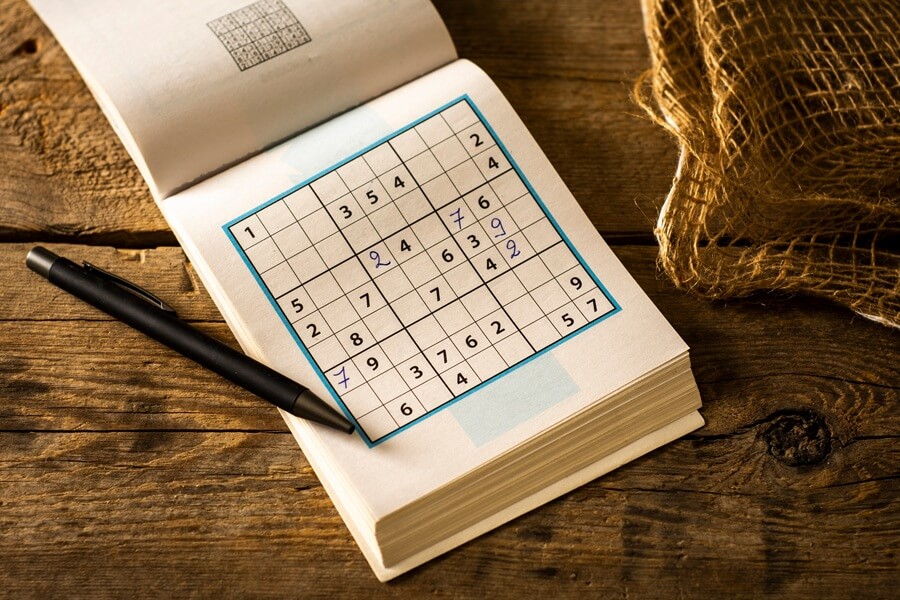
This belief is so deeply ingrained that millions of people are convinced that when they complete a logic puzzle or fill out a Sudoku grid, they are giving their brain the most comprehensive workout possible.
But what happens when this beloved habit is put to the test in brain research laboratories?
In recent years, extensive neuropsychological studies present a completely different scientific reality, one that shatters the myth and explains why crosswords and Sudoku, while wonderful leisure hobbies, do not qualify as memory training.
The Illusion of Skill: The Problem with the “Transfer Effect”
To understand why Sudoku won’t help you remember where you left your glasses, one must understand a core concept in neuroscience: the Transfer Effect.
When we train the brain, the critical question is whether improvement in a specific task spills over into real-life functionality (known as “far transfer”). In a comprehensive study led by Owen et al. (2010) involving over 11,000 participants, researchers examined the impact of training on targeted cognitive tasks. They found that although participants improved significantly in the practiced tasks, no transfer of improvement was observed to general cognitive abilities such as working memory, reasoning, or planning.
These findings were echoed in meta-analytic reviews by Sala and Gobet (2017), which demonstrated that solving puzzles and specific tasks does not yield far transfer to daily functioning. A crossword solver’s brain does not become sharper overall; it simply develops a hyper-specific, technical skill within that particular game.
Autopilot: When Information Retrieval Replaces Learning
When you try to recall a “5-letter European capital city,” you are not building new neural pathways in your brain. You are drawing from your Semantic memory, the reservoir of information, facts, and vocabulary you have accumulated throughout your life.
Retrieving existing knowledge is like walking down a well-paved, familiar path in the forest. The brain operates on “autopilot,” requiring no structural effort and generating no new synapses (neural connections). The same holds true for Sudoku: once you’ve learned the rules of the game and the scanning technique, your brain enters a fixed algorithmic routine.
A famous study from the University of Aberdeen conducted by Staff et al. (2018), which tracked hundreds of subjects over many years, revealed a fascinating finding: people who engaged in crosswords and puzzles did start with a higher cognitive “baseline,” but solving crosswords did not slow down their rate of cognitive decline in older age. The puzzles reflected their pre-existing intelligence, but did not build a new cognitive reserve to protect them against the effects of aging.
he Key to Structural Change: Novelty, Complexity, and Progressive Challenge
Just as lifting a one-kilogram weight for ten years won’t build muscle mass, the brain cannot develop from static, repetitive activities. To trigger mechanisms of neuroplasticity, the brain’s ability to reorganize its structure and form new connections, the brain must encounter three conditions:
- Novelty: Engaging with completely unfamiliar tasks.
- Progressive Overload: A mechanism that increases mental load precisely as the brain begins to adapt.
- Working Memory Engagement: Tasks requiring real-time information processing, divided attention, and rapid decision-making.
A landmark study led by Prof. Denise Park and her team (Park et al., 2014) vividly demonstrated this as part of “The Synapse Project.” Older adults were divided into groups: one group engaged in passive/familiar activities like crosswords and puzzles, while the second learned a completely new and complex skill (such as digital photography or quilting).
Subsequent brain scans and memory tests revealed that only the group learning a new skill showed neural network growth and significant improvements in both short-term and long-term memory.
So How Do You Actually Train Your Memory?
The good news is that the brain retains its ability to change and improve at any age. If you want to give your memory a genuine boost, these evidence-based tools are supported by scientific research:
- Adaptive Cognitive Training: Structured, personalized exercises targeting working memory and processing speed. This type of training continuously adjusts rules and difficulty levels in real time, forcing the brain to stay engaged. The ACTIVE clinical trial (Rebok et al., 2014), funded by the U.S. National Institutes of Health (NIH), followed older adults over 10 years and proved that targeted training in working memory and processing speed improved participants’ daily functioning even a decade after completing the program.
- Learning a Completely New Skill: Studying a new language, learning to play a musical instrument, or mastering a complex new technology pushes the brain out of its comfort zone.
- Combining Movement with Mental Engagement: Aerobic physical exercise increases the secretion of BDNF (a protein that promotes neurogenesis in the hippocampus, the brain’s memory center). Combining movement with mental challenges yields compounded benefits.
The Bottom Line
There is no reason to stop solving crosswords or Sudoku. They are wonderful, relaxing hobbies that pass the time pleasantly and maintain a degree of mental alertness.
However, if your goal is to build a robust cognitive reserve, easily recall names and tasks, and safeguard your memory for years to come – don’t rely on crosswords alone. Your brain requires genuine, dynamic, and complex challenges that step outside its comfort zone and force it to grow.
To trigger true neuroplasticity, static rules aren’t enough. Start your adaptive, personalized cognitive training with Effectivate today.
References
Owen, A. M., Hampshire, A., Grahn, J. A., Stenton, R., Dajani, S., Burns, A. S., Howard, R. J., & Ballard, C. G. (2010). Putting brain training to the test. Nature, 465(7299), 775–778.
Park, D. C., Lodi-Smith, J., Drew, L., Haber, S., Hebrank, A., Bischof, G. N., & Aamodt, W. (2014). The impact of sustained engagement on cognitive function in older adults: The Synapse Project. Psychological Science, 25(1), 103–112.
Rebok, G. W., Ball, K., Guey, L. T., Jones, R. N., Kim, H. Y., King, J. W., Marsiske, M., Morris, J. N., Unverzagt, F. W., & Willis, S. L. (2014). Ten-year effects of the ACTIVE cognitive training trial on cognition and everyday functioning in older adults. Journal of the American Geriatrics Society, 62(1), 16–24.
Sala, G., & Gobet, F. (2017). Does far transfer occur? Using meta-analysis to challenge the traditional sight of cognitive training. Current Directions in Psychological Science, 26(6), 515–520.
Staff, R. T., Hogan, M. J., & Whalley, L. J. (2018). Intellectual engagement and cognitive ability in later life (the Aberdeen 1936 birth cohort study): Longitudinal study. BMJ, 363, k4925.